 Subscribe on YouTube
Subscribe on YouTube
Subscribe on YouTube
How Anastasia Potapova’s Roland Garros press conference revealed the real reason behind her breakout clay court season
Anastasia Potapova had just pulled off one of the biggest upsets at Roland Garros 2026 - a grueling comeback win over defending champion Coco Gauff, 4-6, 7-6, 6-4. But it was what she said after the match that stopped the room.
Asked whether her two best results on tour were a coincidence following her switch from Russia to Austria, Potapova didn’t hedge. “I do feel free,” she said. “I feel better. I feel the support from Austrian people, and for sure it’s giving me extra boost of energy to fight for those wins.” For a player who had spent a decade grinding on the WTA Tour without a major breakthrough, the words landed differently than a typical post-match soundbite. This wasn’t just tactical reflection. It was a player telling you exactly who she is now.
Potapova’s win over Gauff in Paris is the centerpiece of what has been a quietly remarkable clay court stretch. From Madrid to Rome to Roland Garros, she has been one of the most consistent performers on the surface in 2026 - and the Potapova press conference gave the clearest window yet into why.
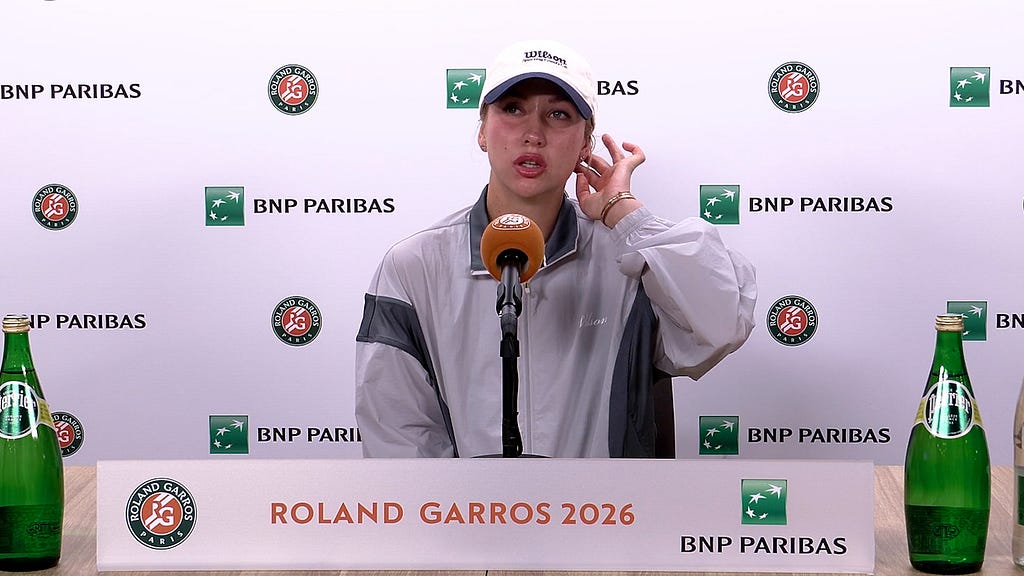
One of the most telling moments from the Potapova press conference came early. When a journalist asked which specific tactics proved most effective against Gauff, Potapova smiled and shut it down immediately: “I keep it for myself.”
It was a small moment, but a revealing one. This isn’t a player operating on instinct alone. There’s a deliberate strategic framework behind how she approaches matches now - one she’s not about to hand to her next opponent. After ten years on tour, Potapova has learned that information is currency.
When pressed on her consistency across the clay swing, Potapova connected the dots clearly. Three things have shifted:
That last point was particularly relevant against Gauff. Potapova acknowledged that Gauff was nearly impossible to put away - “so good physically, she runs so good, she’s defending so well” - but rather than finding a way around that, Potapova had trained to match it. She out-grinded the player famous for grinding.
One of the more candid exchanges in the Potapova press conference came when she was asked how nervousness manifests in her body. She was straightforward: it starts in the stomach, just like everyone else. But the key, she said, is movement. “The best peel from the nerves is actions - try to make sure you move enough, you don’t stop your legs.” After nearly a decade on the biggest stages in tennis, she’s found a physical routine that keeps panic from becoming paralysis.
The match against Gauff was not clean. There were lead changes, momentum swings, and moments where it would have been easy to spiral. Potapova was asked directly how she kept her composure through all of it.
Her answer was simple and repeatable: “I kept on saying to myself that I don’t need to focus on the scoreboard, just focus on every point.” It’s a well-worn mental framework in tennis, but hearing it from a player who had just executed it against the world’s best closer is something different. Potapova didn’t just talk about staying in the moment - she demonstrated it under pressure when the match was on the line.
There’s a line Potapova dropped that deserves to sit with you: “I’ve been here for 10 years on tour and this is the first time I managed to do this well.”
Ten years. Not a prodigy who arrived fully formed. A player who absorbed failure, rebuilt her team, moved countries, and eventually found the version of herself that could beat defending Grand Slam champions on the biggest clay court in the world. The Potapova Roland Garros run isn’t a flash. It’s a decade of work arriving on schedule.
The quiet part she said out loud? That feeling free - genuinely free - might be the most powerful performance enhancer in tennis.
Enjoying this story? Subscribe to The Tennis Pass on YouTube for daily tennis news, highlights and interviews.
Subscribe to The Tennis Pass on YouTube

