 Subscribe on YouTube
Subscribe on YouTube
Subscribe on YouTube
Amélie Mauresmo faced the press on line-calling technology, Sinner’s scheduling controversy, court safety, and the prize money dispute. Here’s what she actually said.
The most revealing press conferences at Roland Garros aren’t always with the players. Sometimes the clearest picture of where tennis is headed comes from the people running the tournament - and this week, French Open Tournament Director Amélie Mauresmo sat in front of the media and answered questions that the sport has been dancing around for months.
Line-calling technology on clay. A scheduling row involving the world №1. Court safety after a player got hurt. And an ongoing standoff between the Grand Slams and players over prize money. Mauresmo addressed all of it - and while the answers were diplomatic, the substance was pointed.
The most technically significant exchange concerned electronic line-calling and whether Roland Garros would consider introducing it after a high-profile incident involving Casper Ruud. Mauresmo’s answer was more candid than expected.
“As of today, the technology on clay is not 100% reliable,” she said. “We keep the confidence to the human” line judges.
It’s a meaningful admission. The rest of the tour has been rapidly moving toward electronic line-calling - the US Open, Australian Open, and most ATP hard court events now operate without human line judges entirely. Roland Garros, along with Wimbledon, has held back. The clay court surface, where ball marks are visible and traditionally used as evidence, presents unique technical challenges for optical tracking systems. Mauresmo’s comments confirm the tournament is actively evaluating the technology each year, but won’t commit until it meets the reliability bar. She also noted - pointedly - that Ruud himself didn’t appear shocked by the umpire’s call in question, suggesting the incident wasn’t as clear-cut as it appeared on broadcast.
On the issue of court dimensions and player safety — raised after Alex Blockx was hurt near the court infrastructure - Mauresmo confirmed that the blocks at the back of the courts had already been repositioned during the tournament to create more space. She was careful to note that Roland Garros courts already exceed the minimum dimensions required by the rules, but acknowledged the message was clear: players need more room.
When asked whether permanent expansion was possible in future years, she didn’t dismiss it. “This is a subject we will put on the table to see how we can try to make things different,” she said. Don’t expect immediate structural changes, but it’s on the agenda.
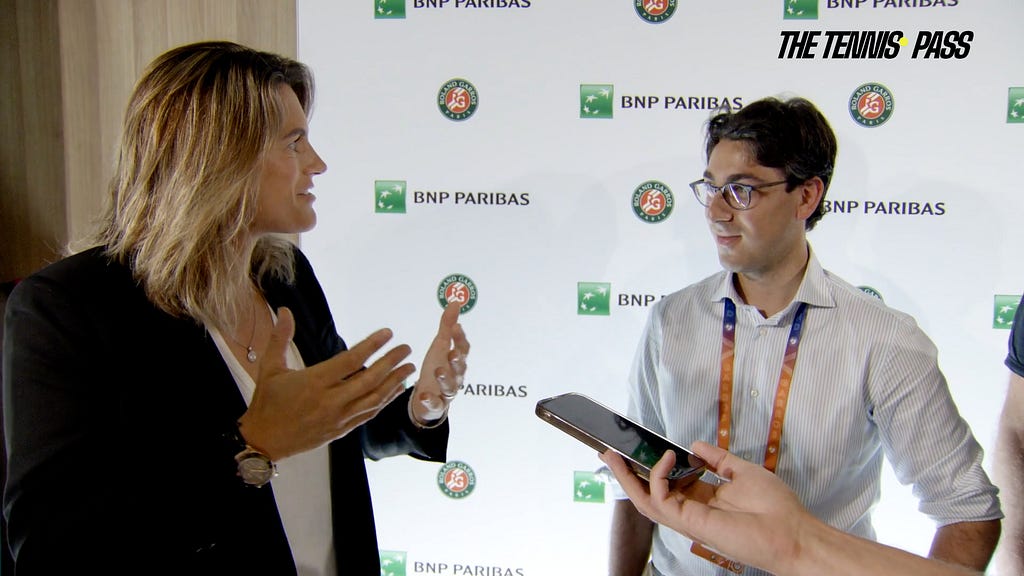
One of the more delicate moments came when an Italian journalist raised Jannik Sinner’s match scheduling - a topic that had been widely discussed among Italian fans and media. Mauresmo’s response was firm and consistent with how the tournament has handled similar questions: “I will never comment on TV requests, player requests - never.”
Her position was that players are free to publicly discuss what they have or haven’t requested. The tournament will not confirm or deny any specific scheduling arrangements. When pressed on how to explain the situation to new fans - particularly given the surge in Italian tennis interest - she essentially declined to provide one. “We are only able to talk about what we are doing,” she said.
It’s a policy position, not an evasion. But it leaves a gap in public understanding that the tournament has, so far, chosen not to fill.
Perhaps the most substantive section of the press conference touched on the ongoing tension between the Grand Slams and players over revenue distribution. A journalist raised the question of whether players truly understand the economic model - that Roland Garros is nonprofit, that the money flows back to federations, the ITF, the ATP, and the WTA, funding the grassroots infrastructure of the sport.
Mauresmo’s response was notably self-critical. “We also have the duty to explain it maybe better,” she said. “It’s an economic model that we are nonprofit, so it all goes back to the root of tennis.”
She acknowledged that the conversation between the tournament and players is ongoing, and that a clearer picture would emerge after Wimbledon. But the framing was conciliatory rather than defensive - an implicit acknowledgment that the Grand Slams have not communicated their financial model effectively, and that players’ frustration, while not necessarily warranted, is at least understandable given the information gap.
Mauresmo’s press conference painted a picture of a tournament that is moving - just slowly, deliberately, and on its own terms. Hawkeye is coming to clay eventually; the question is when the technology is ready. Court dimensions will be revisited. The prize money debate will continue past this tournament. Line judges will stay for now.
What came through most clearly was a director who understands the pressures bearing down on Roland Garros from all sides - technology, player relations, safety, commercial interests - and is choosing careful consensus-building over rapid change. Whether that’s wisdom or inertia depends on which side of the debate you’re on.
Enjoying this story? Subscribe to The Tennis Pass on YouTube for daily tennis news, highlights and interviews.
Subscribe to The Tennis Pass on YouTube

